Sjogren’s syndrome is a complicated disease. It can occur on it’s own, or more commonly, in conjunction with other autoimmune disorders, like Lupus, Fibromyalgia, or RA. In my case I have primary Sjogren’s with likely Fibromyalgia and maybe Irritable Bowel.
Sjogren’s syndrome can appear as glandular and extraglandular. Many people only develop glandular symptoms, but others like me have both types of symptoms.
Glandular symptoms arise due to lymphocytic damage in lacrimal, or tear-producing, glands; and salivary, or saliva – producing glands. In other words, lymphocytes, specific white blood cells, mistakenly identify normal tear and saliva producing tissue as not belonging to the body, and destroy those tissues. The result?
Dry eyes
Dry mouth
Altered sense of taste and smell
Dry upper respiratory tract
Voice becomes hoarse after speaking
Development of oral yeast infections, or candidiasis
Parototitis, or inflammation of the parotid salivary glands, and production of stones in the salivary glands
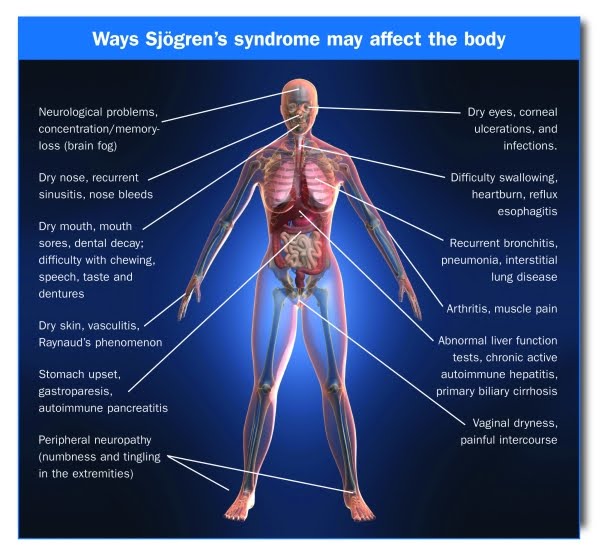
Extraglandular symptoms occur elsewhere in the body, and the list is extensive:
Skin
Lungs
Gastro-intestinal tract
Pancreas
Liver
Heart
Neurological system
Kidneys
Joints
Reproductive system
Fatigue
Increased incidence of lymphoma
 Faking it.